
Turning a 3-Day Phone Tag Process into 60-Second Bookings
A two-sided platform tackling a $70B industry problem — customers can't get transparent pricing for hauling services, and providers lose 40% of leads to slow response times.
The Problem
The $75.6B junk removal market still runs on phone calls and guesswork. Customers Google 'junk removal near me,' call 3-4 companies, leave voicemails, and wait days for a vague quote: '$200 to $400, depends on what we see.' Providers manage their business through texts, voicemails, and Facebook messages — and lose 40% of leads simply because they don't respond within an hour. For a solo operator doing $150K/year, that's $60,000 in lost revenue.
Goals
- ▸Reduce booking from '3 phone calls and 2 days of waiting' to '3 taps and 60 seconds'
- ▸Give customers full price breakdowns — labor, dump fees, drive time — so there are zero surprises
- ▸Build HaulHub Pro — a provider dashboard that centralizes every quote, job, and schedule into one screen
- ▸Design for trust on both sides: customers paying upfront and providers adopting a new tool
Key Findings
I interviewed 6 customers and 3 hauling business operators, analyzed 5 competitors (LoadUp, LuggHub, Dolly, TaskRabbit, Thumbtack), and reviewed HomeAdvisor's lead response data.
Price opacity is the #1 customer complaint. Every interviewee said some version of 'I had no idea what it would cost until they showed up.' Customers who see a breakdown upfront convert at 2.4x the rate of those given a range
Providers aren't losing to competitors — they're losing to their own inbox. By the time they respond to a quote request, the customer has already booked someone else. One operator estimated 5–8 lost jobs per week from slow response time alone
Photo-based quoting is the unlock. 80% of phone estimates are wrong because customers can't describe what they need hauled. Photos let providers quote accurately from their truck between jobs — cutting the timeline from days to under an hour
The two-sided trust gap: customers don't trust upfront pricing (hidden fees). Providers don't trust platforms (no-shows, chargebacks). Both sides need different trust signals to commit
From Wireframes to High Fidelity
Two connected experiences sharing one system: a customer booking flow optimized for speed and transparency, and a provider dashboard (HaulHub Pro) built to replace the text-and-notebook workflow. The price breakdown card became the centerpiece — when people see exactly where their money goes, they stop hesitating.
Wireframes
Low-fidelity exploration of core screens and user flows
Homepage — Full Scrollable Page
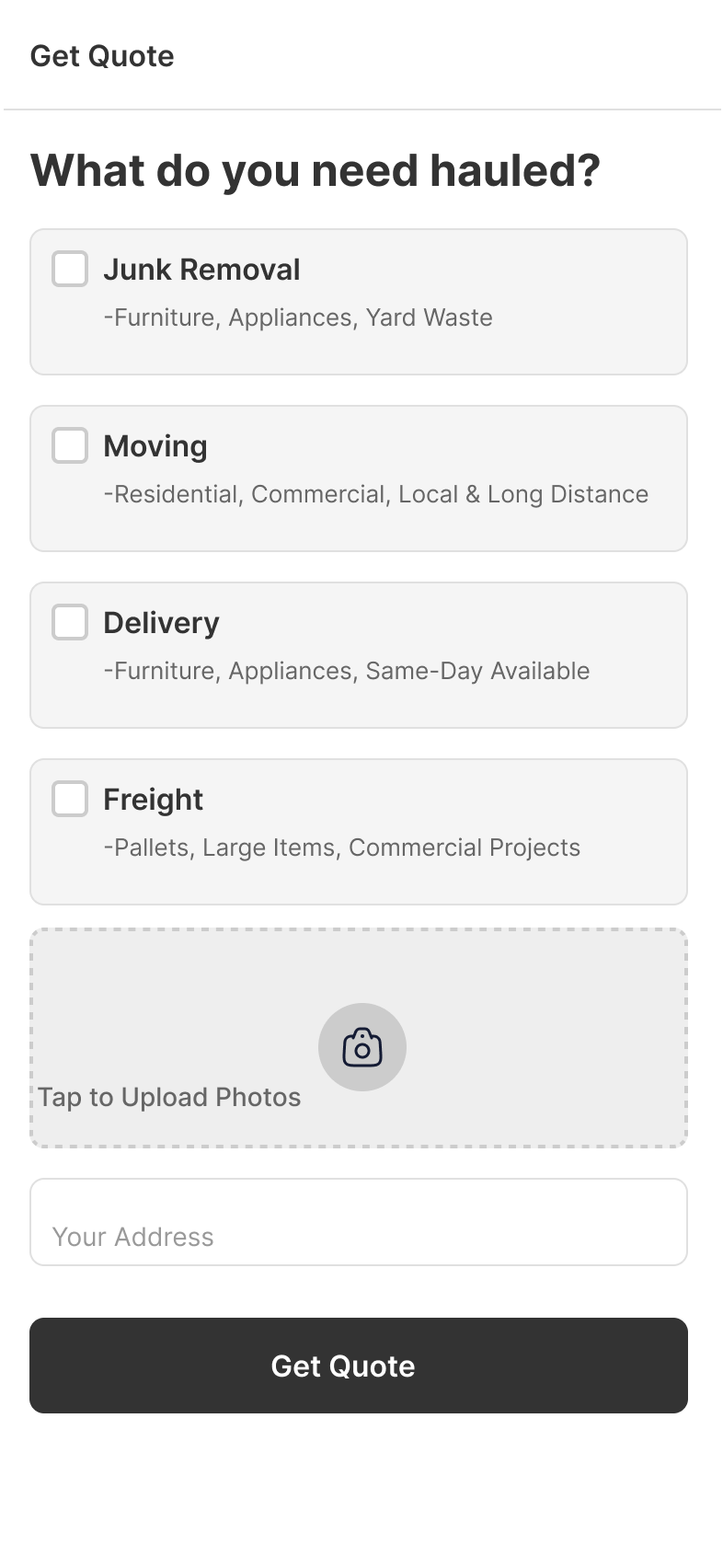
Service Selection
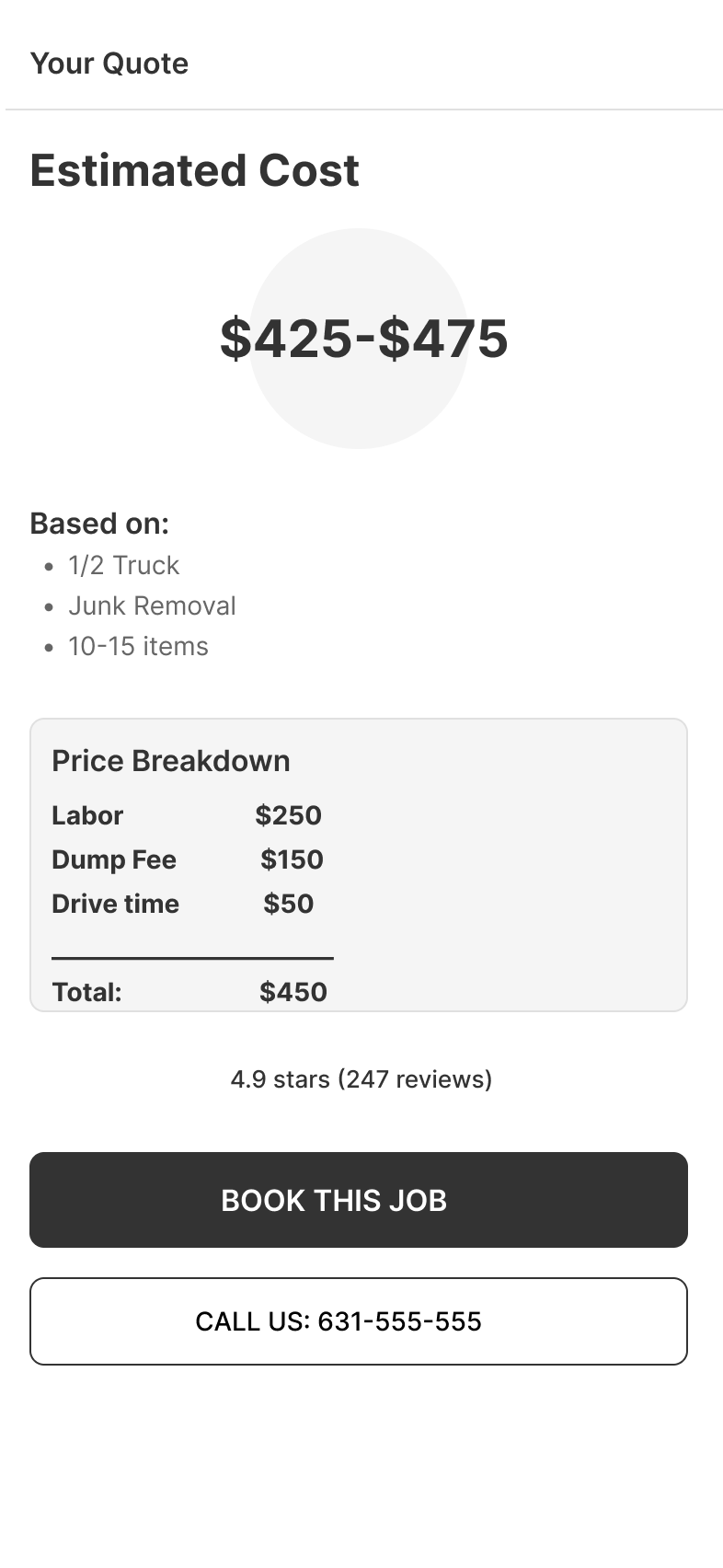
Quote Result
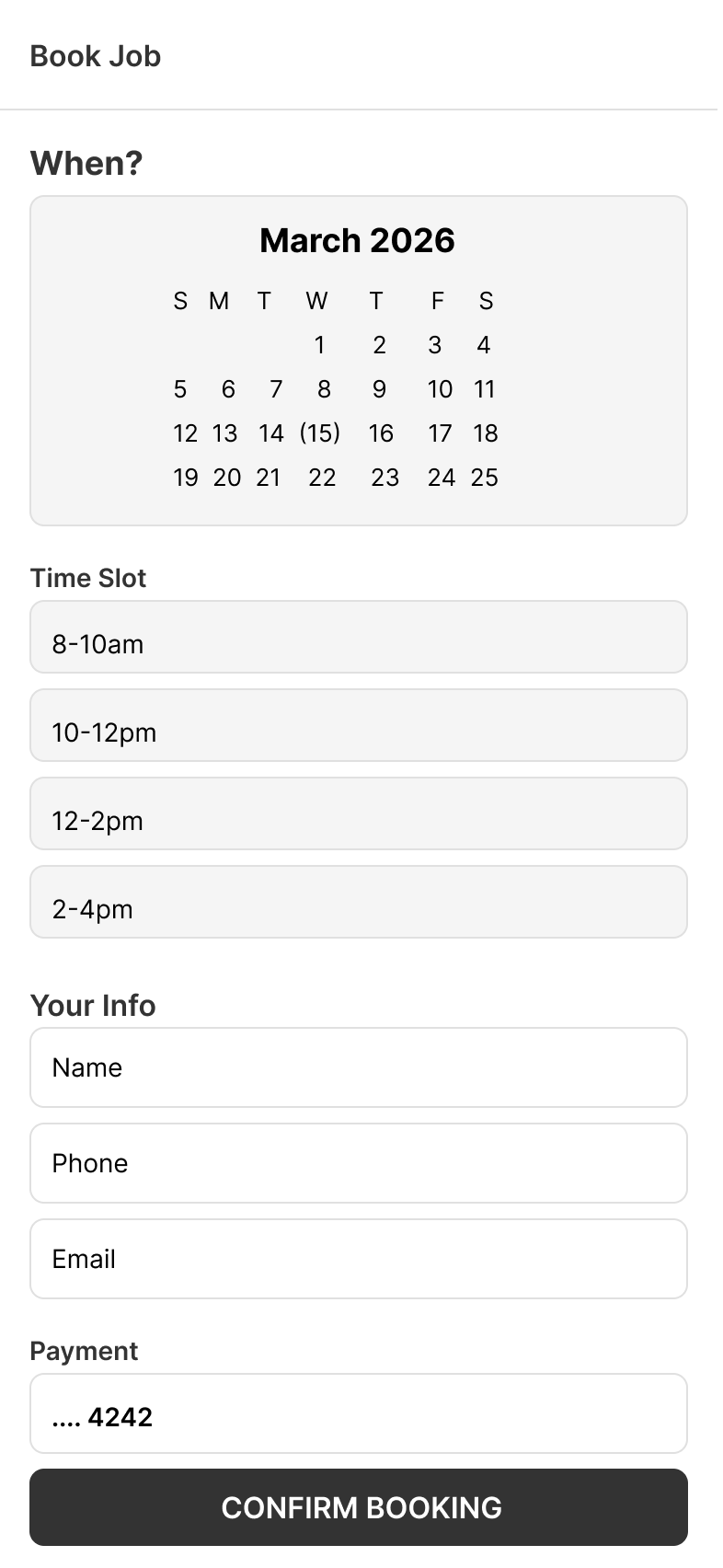
Schedule & Pay
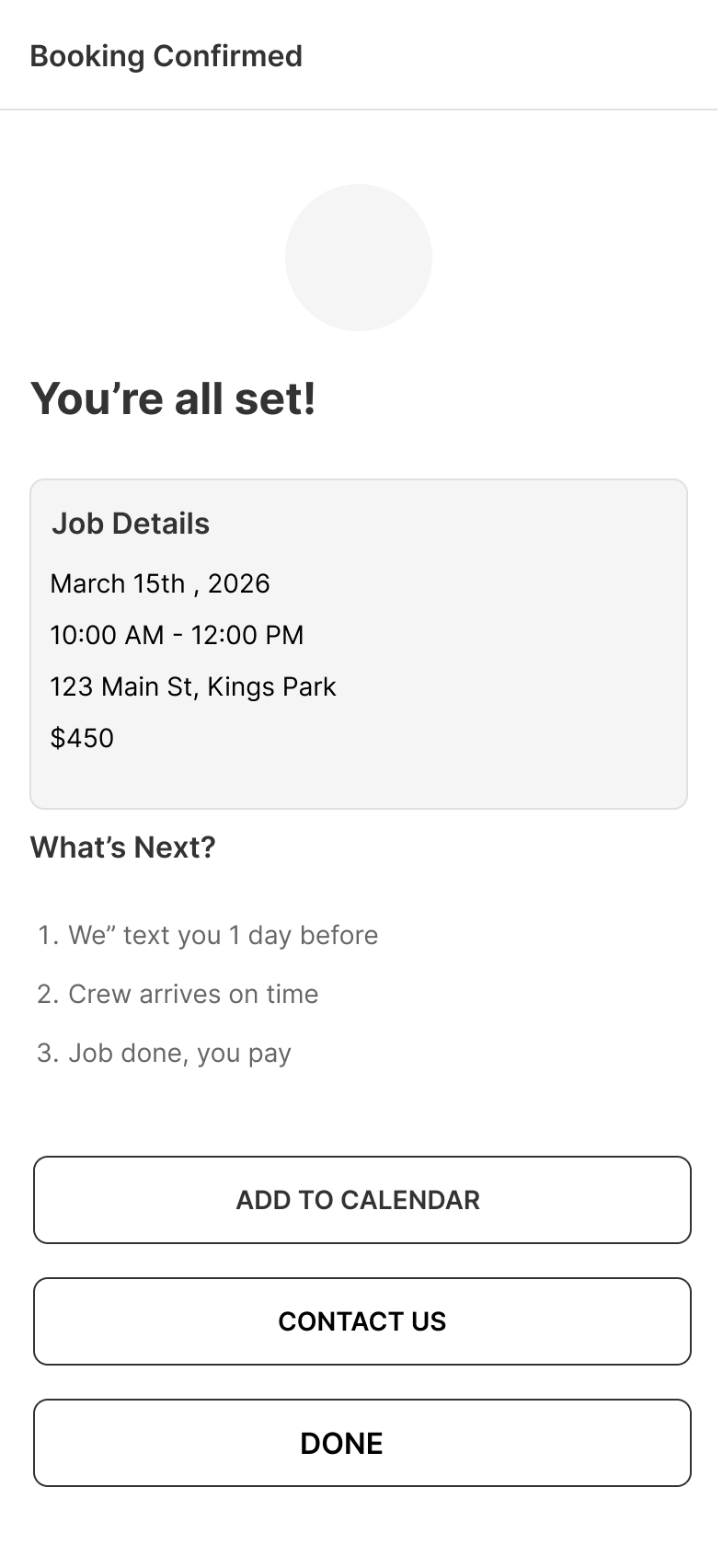
Confirmation
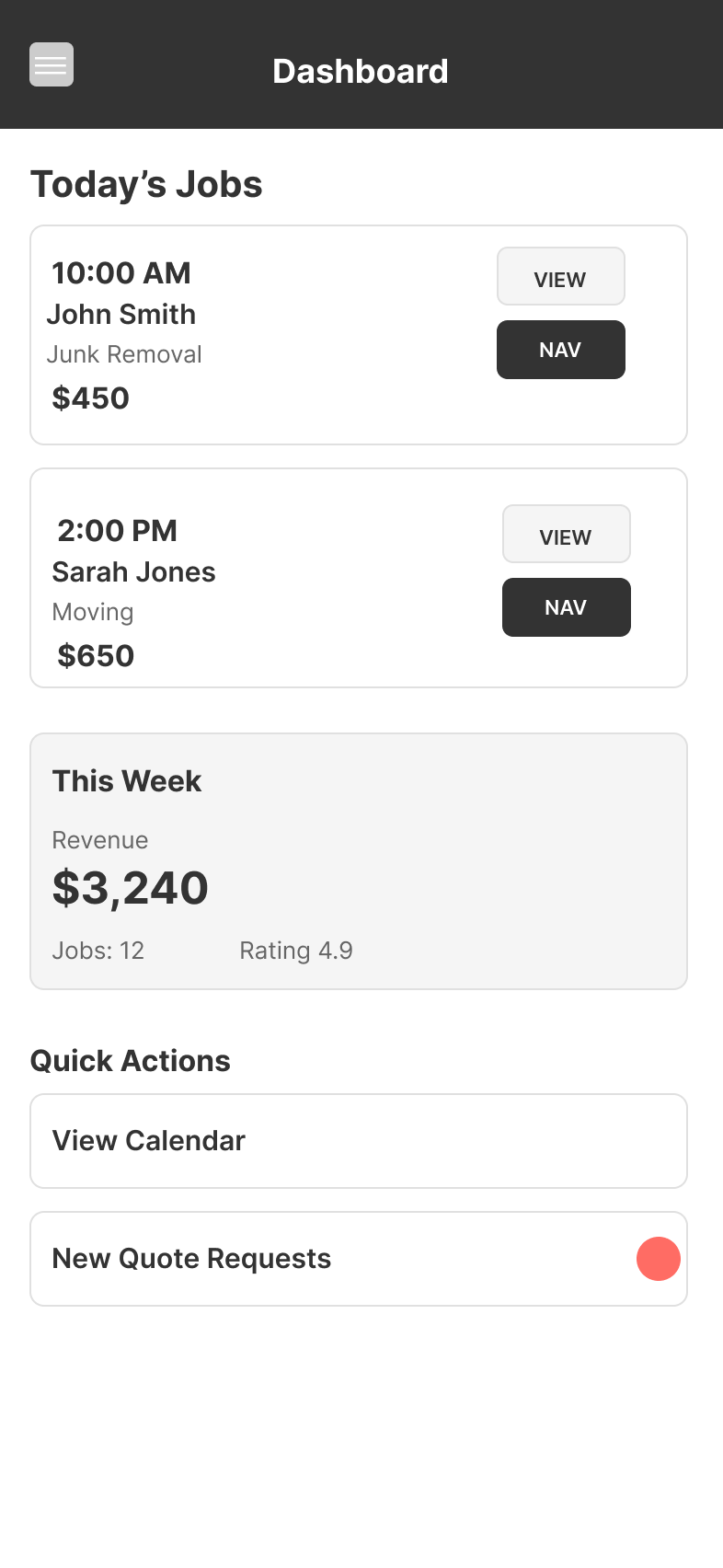
Pro Dashboard
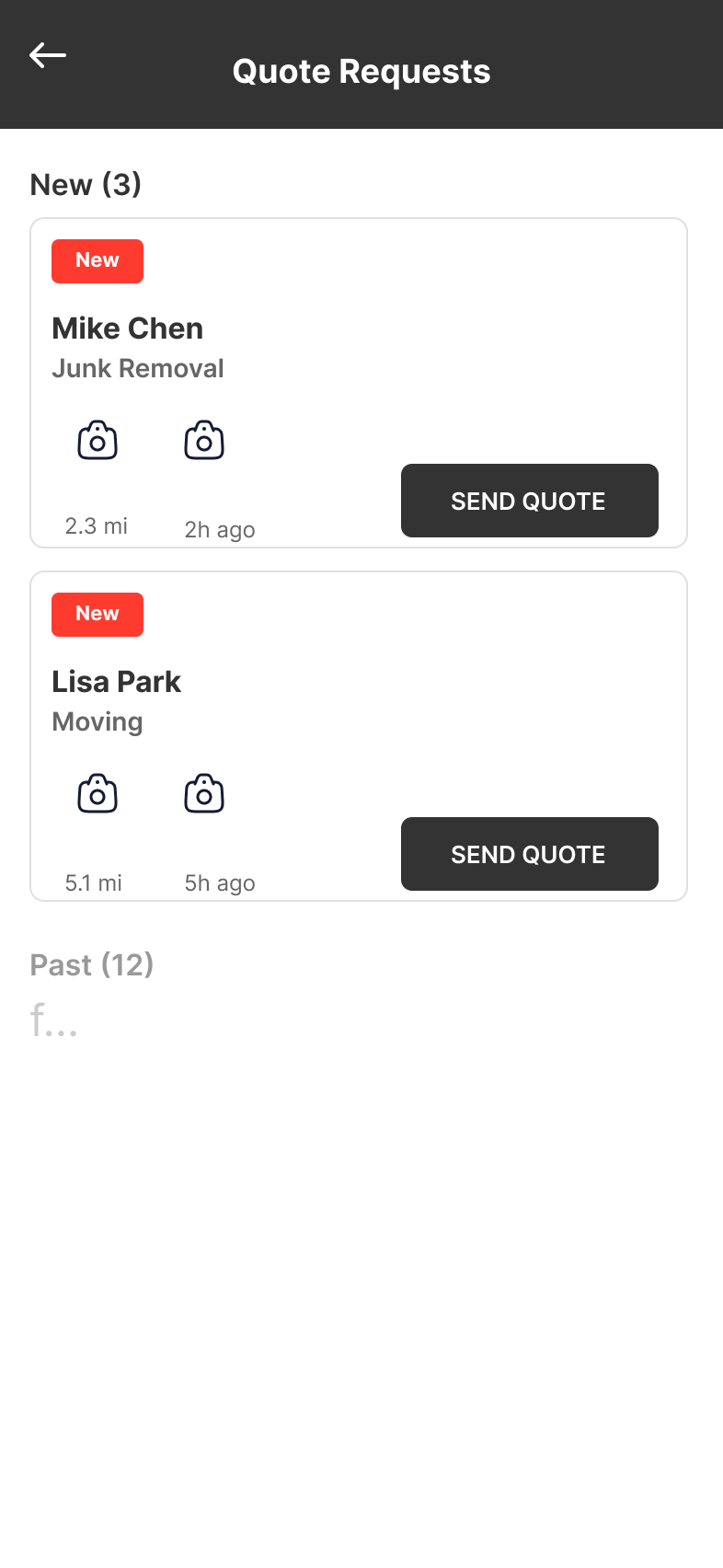
Quote Requests
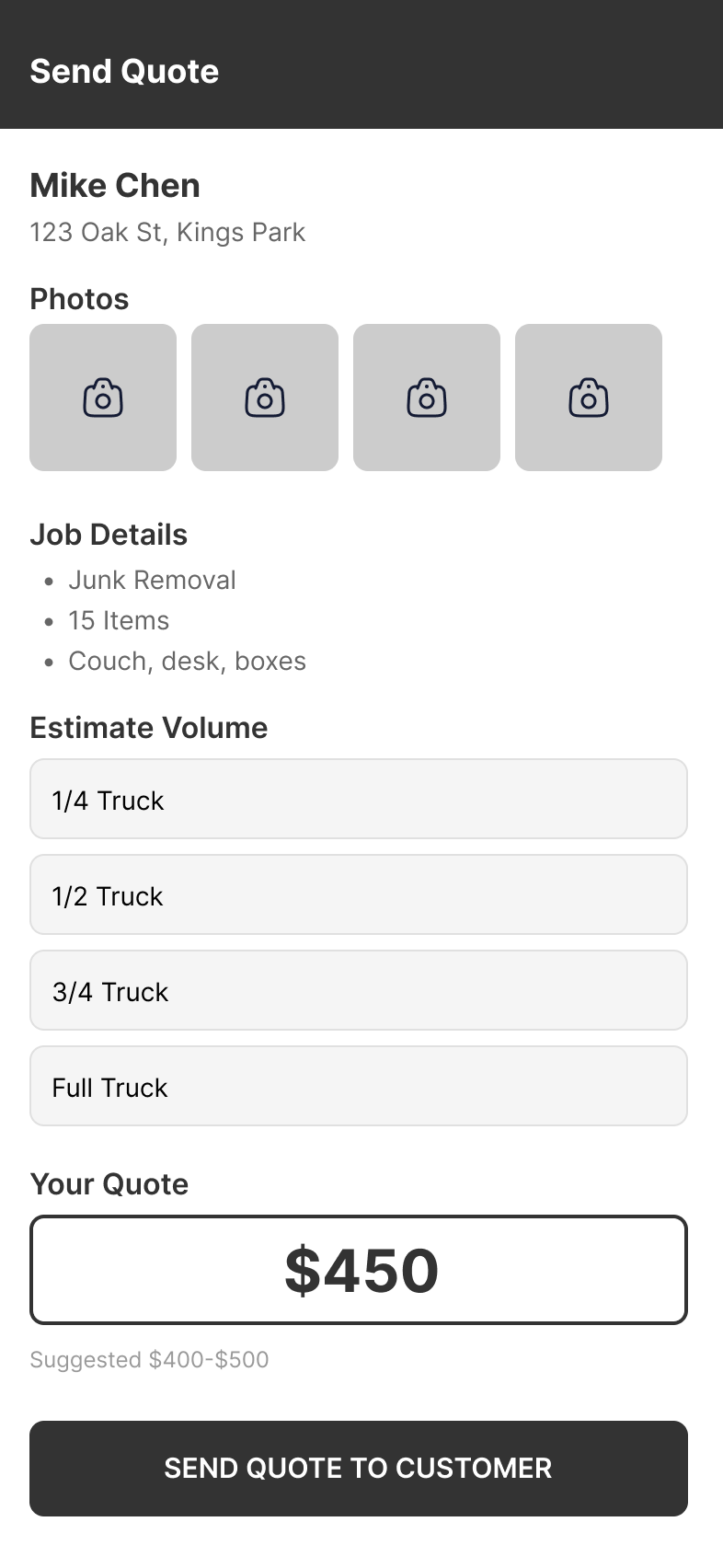
Send Quote
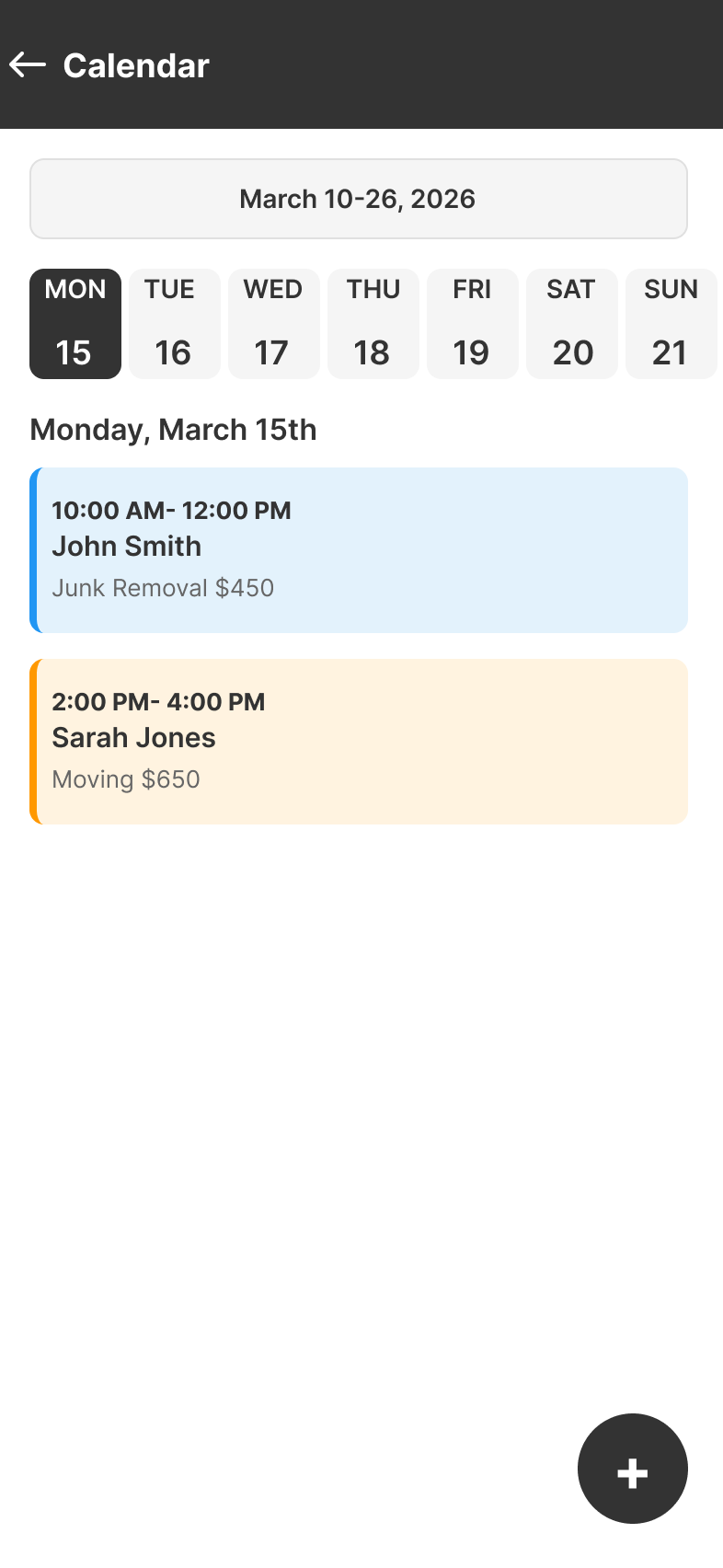
Calendar
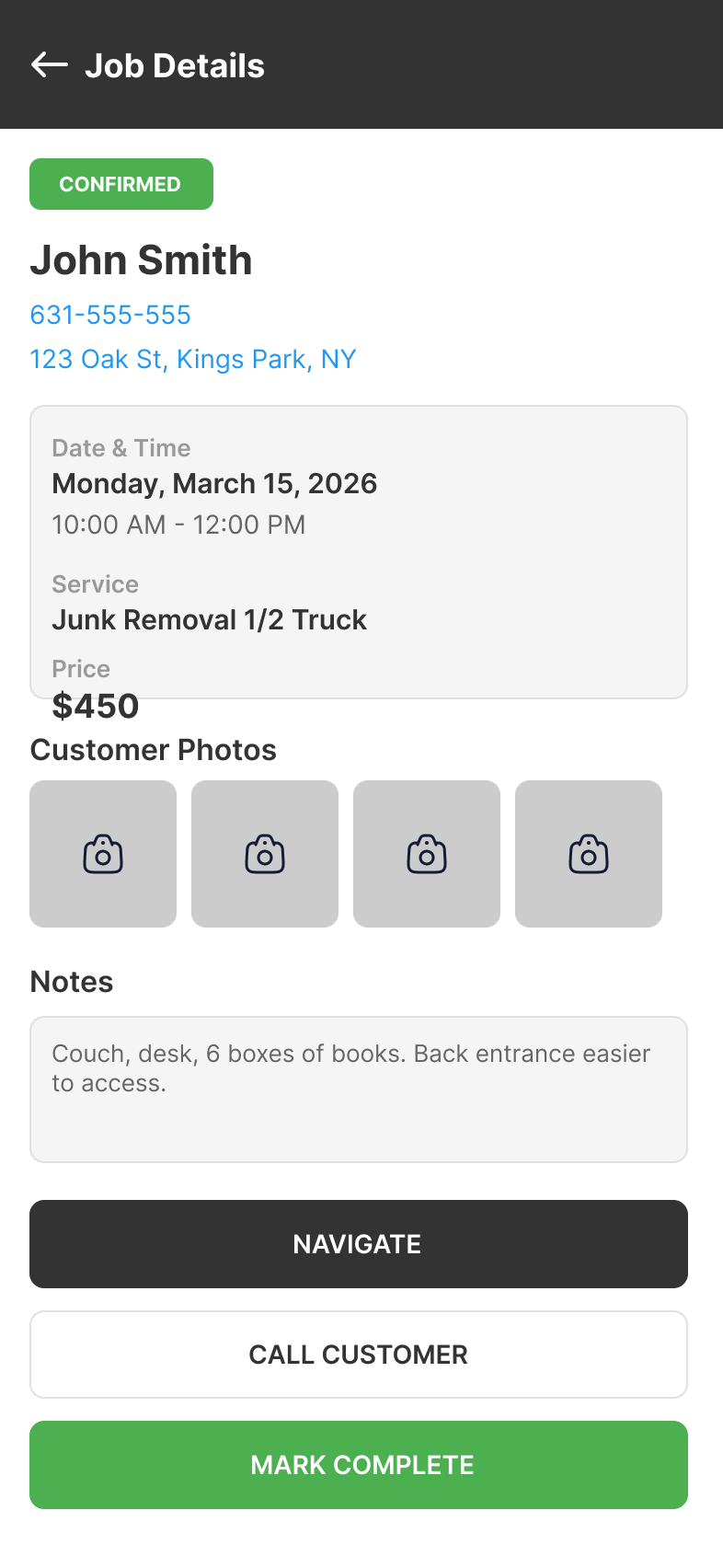
Job Details
High-Fidelity Screens
Final designs with complete design system applied
Homepage — Full Scrollable Page
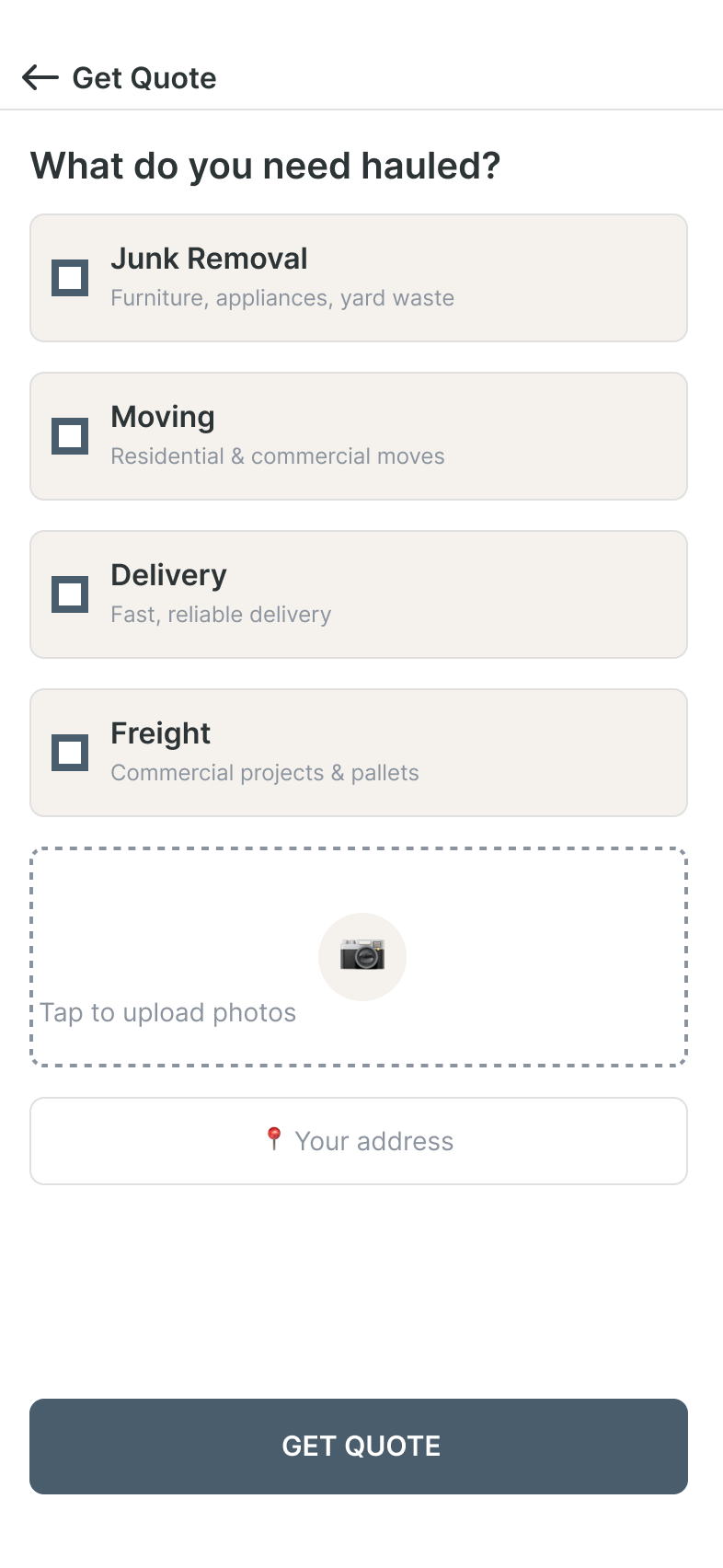
Service Selection
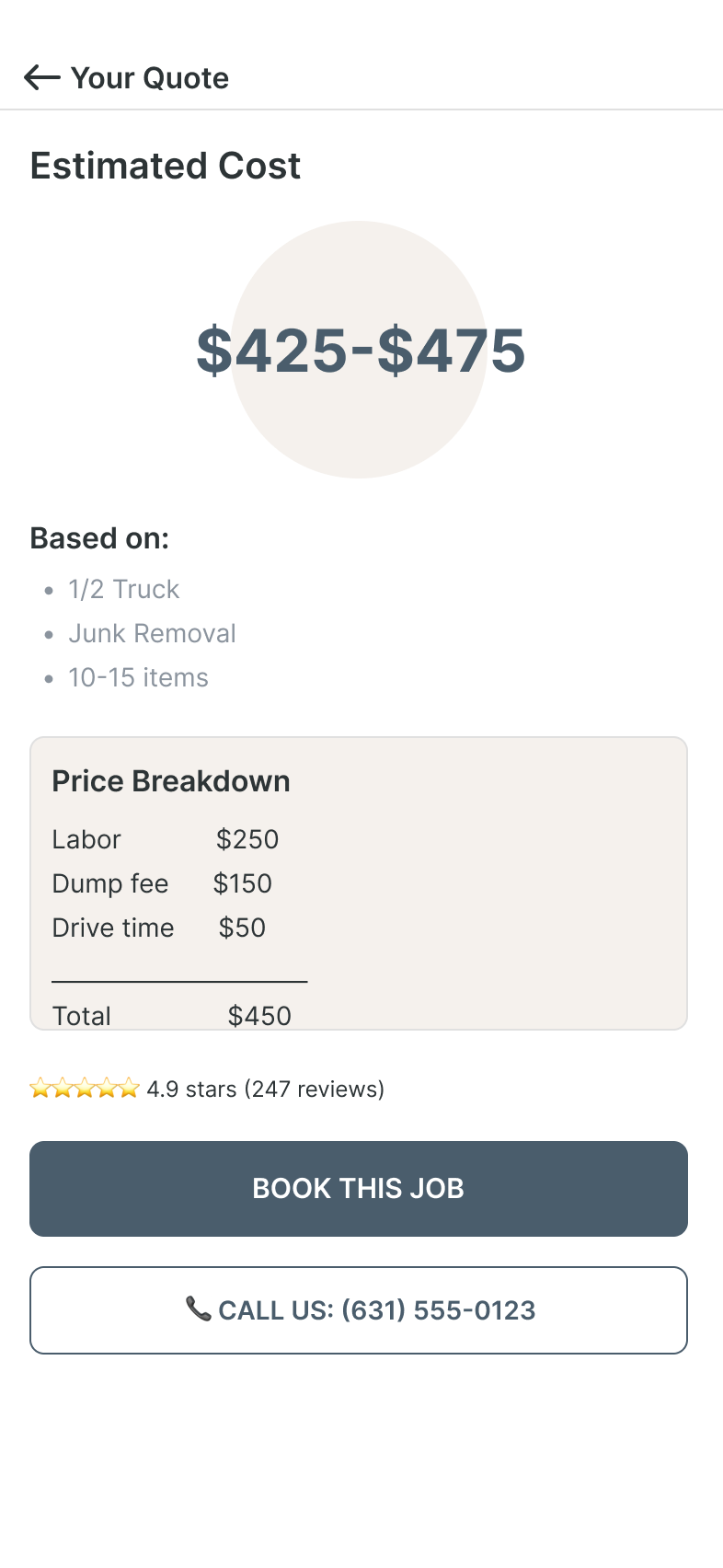
Quote Result
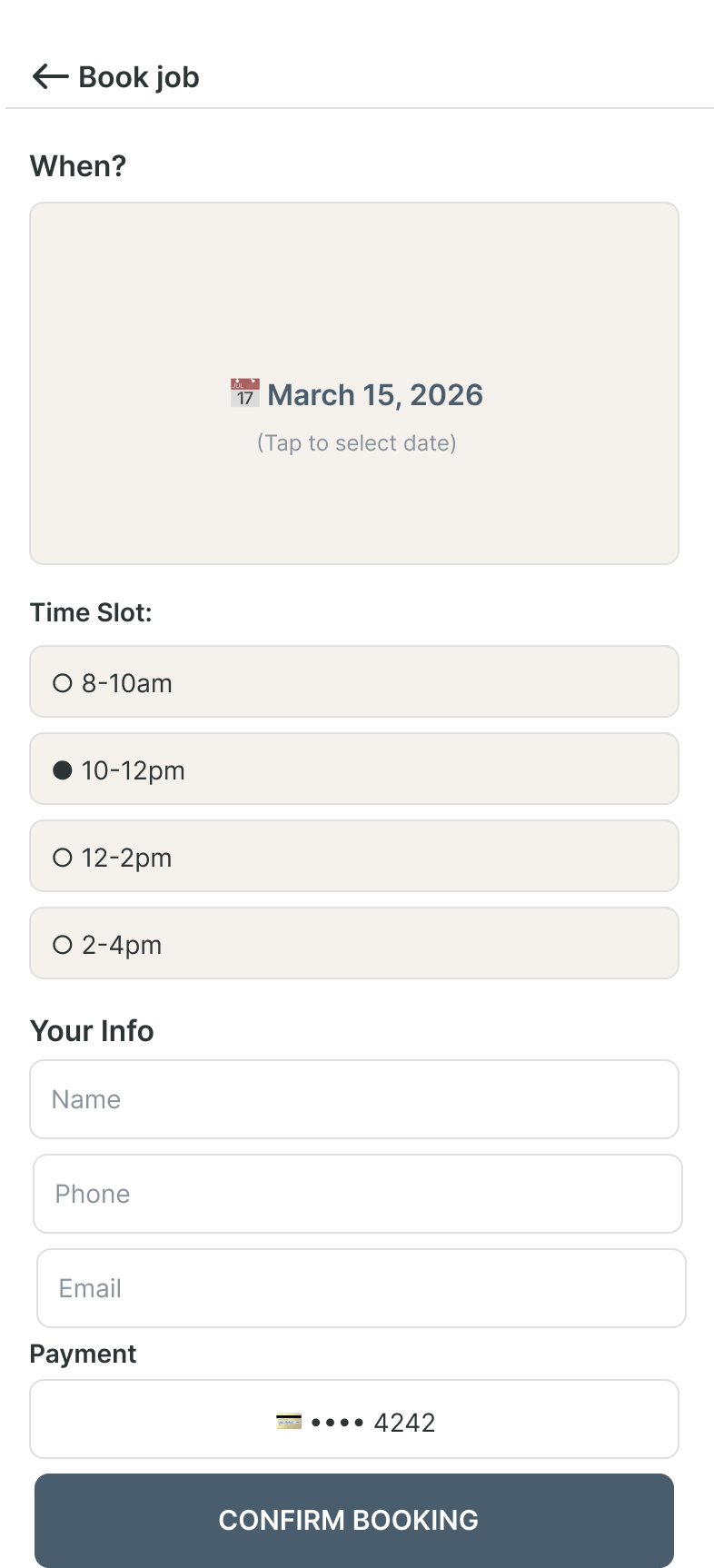
Schedule & Pay
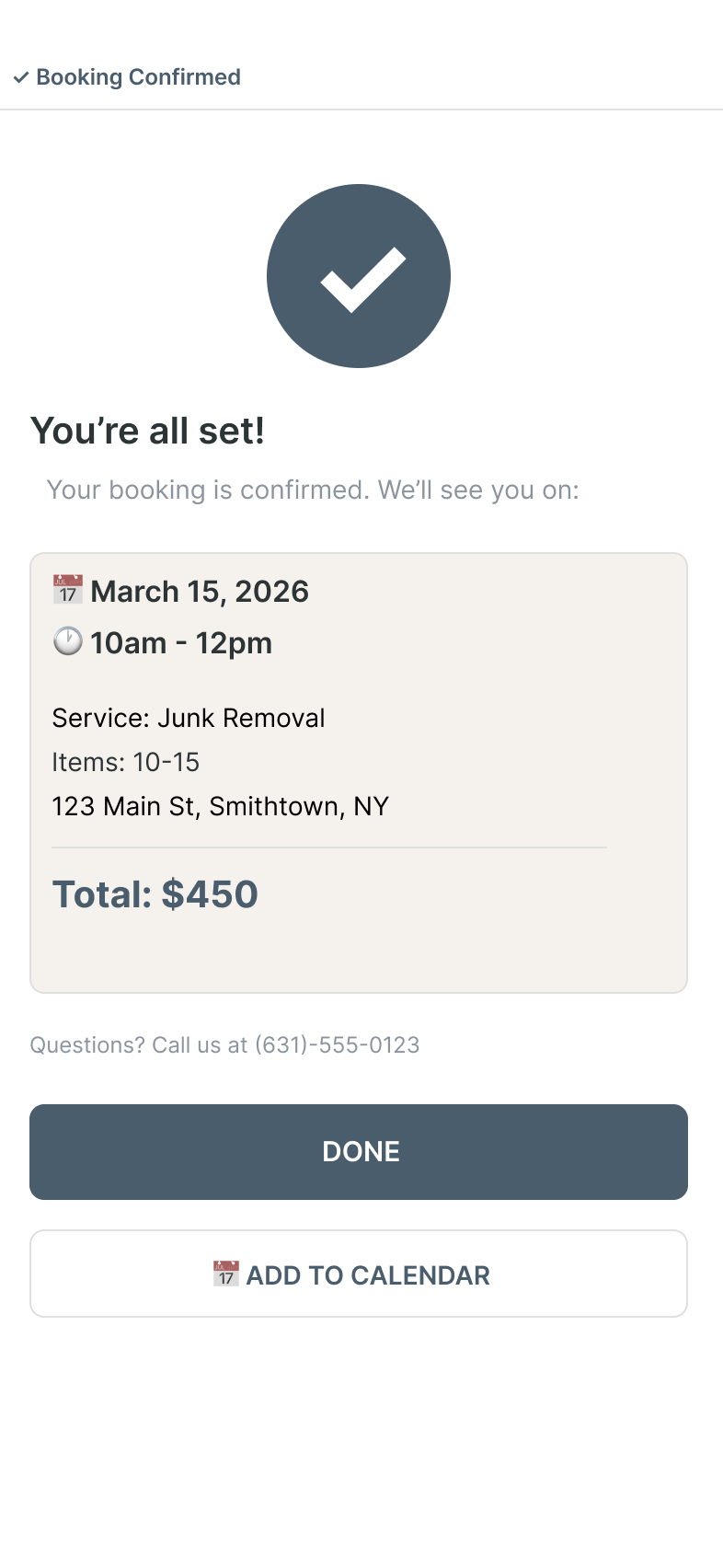
Confirmation
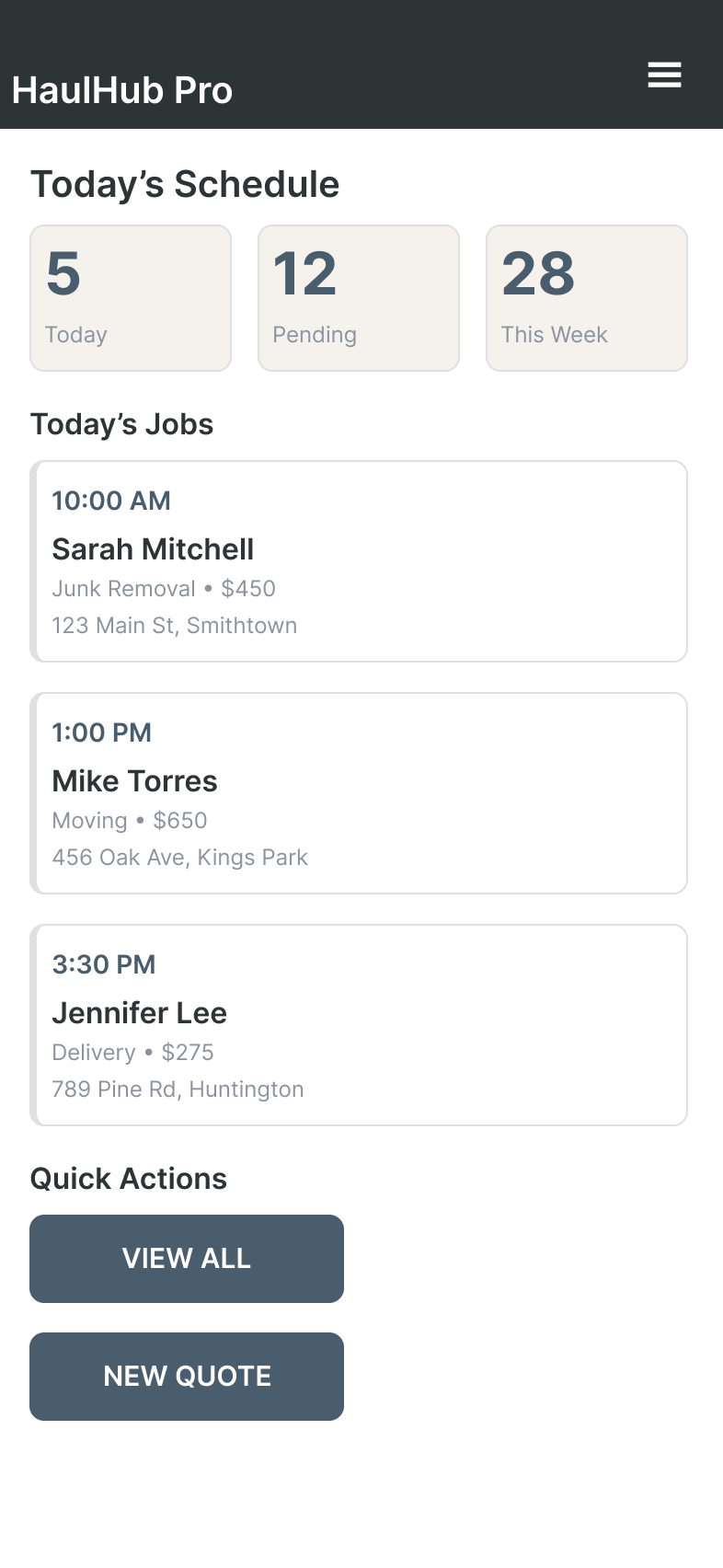
Pro Dashboard
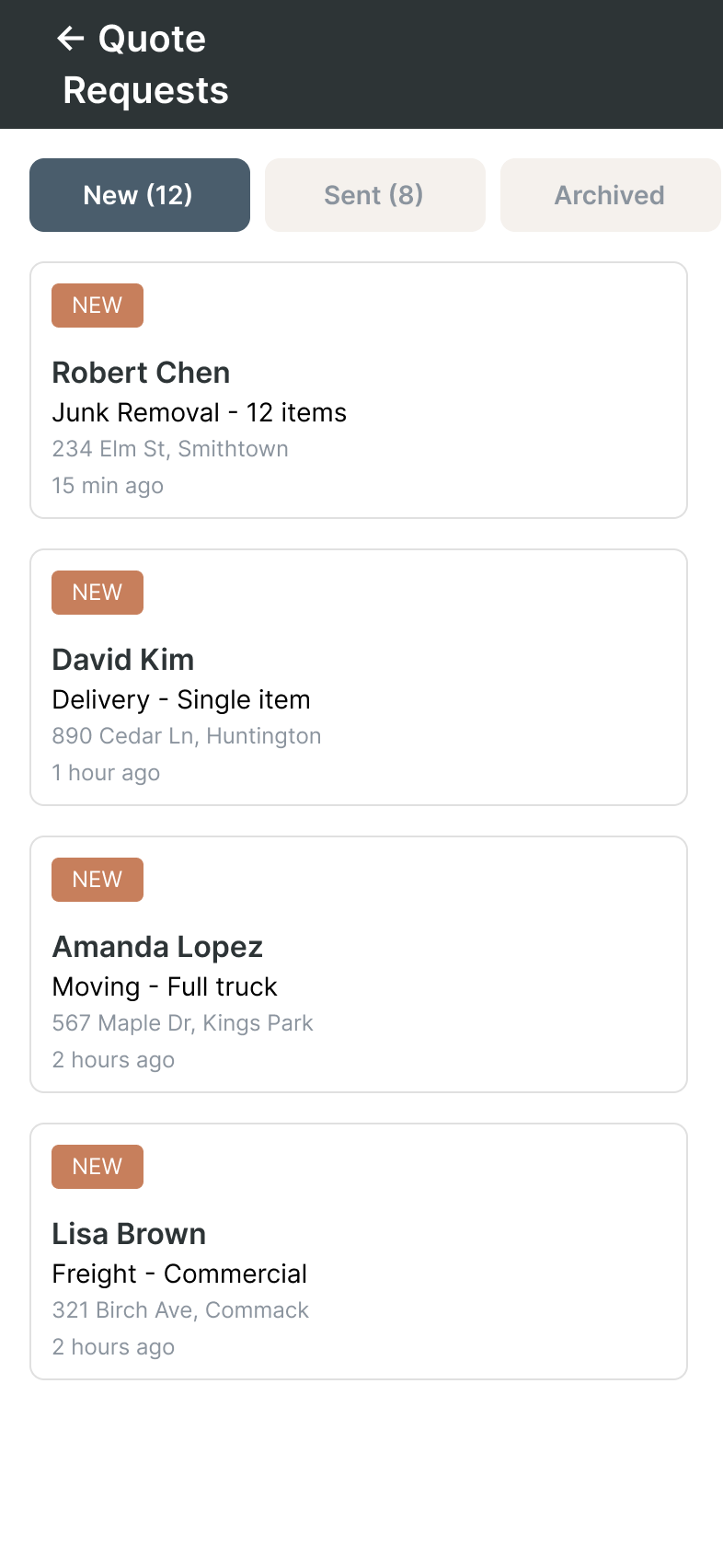
Quote Requests
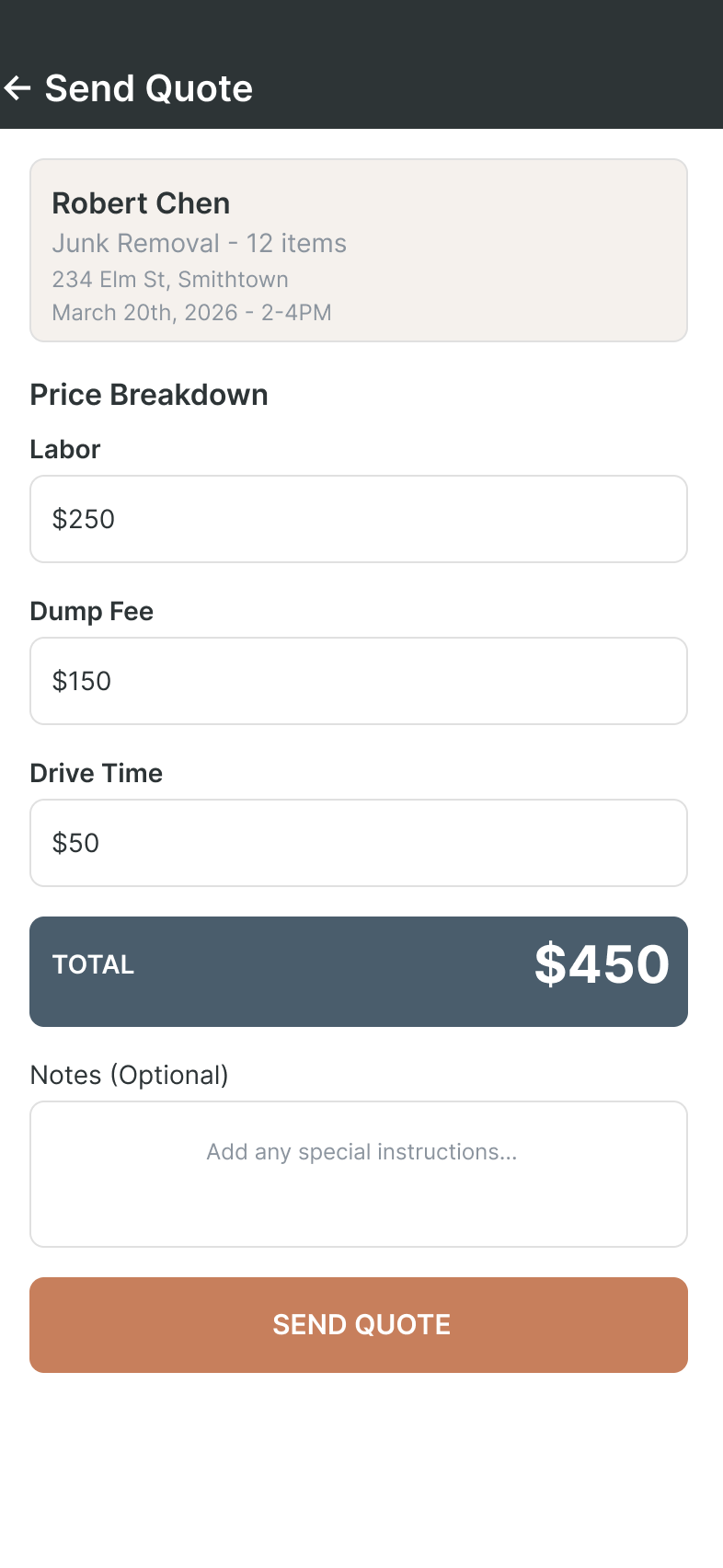
Send Quote
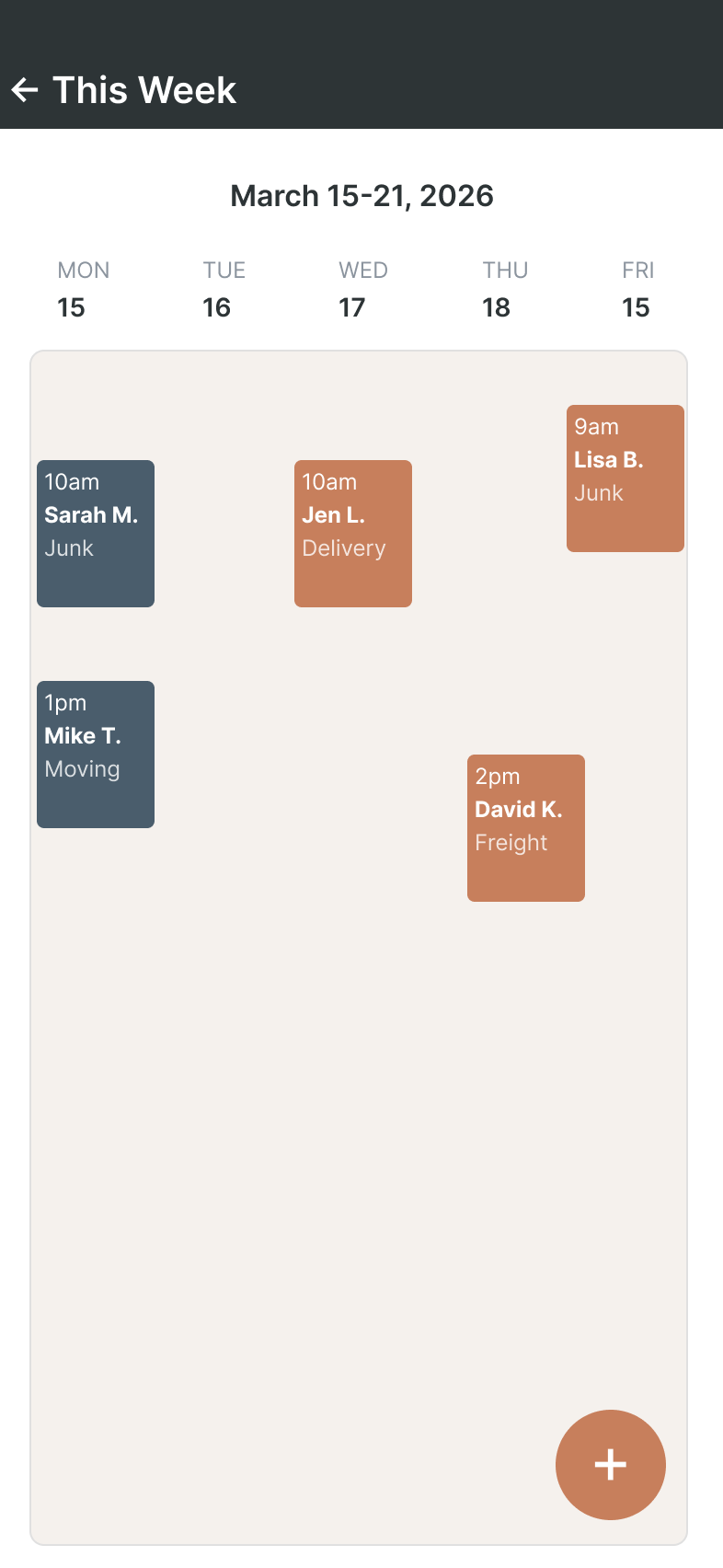
Calendar
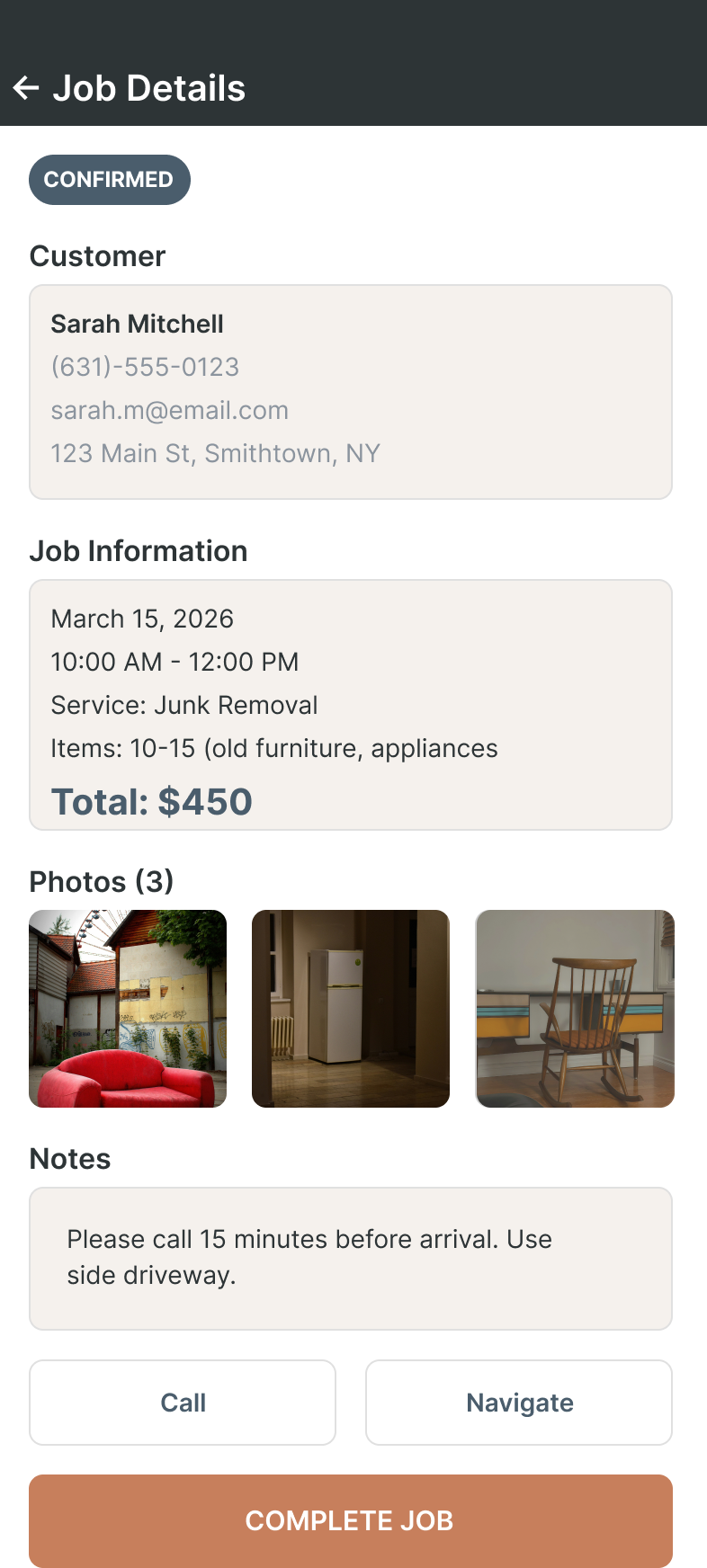
Job Details
Visual Foundation
Color Palette
Typography Scale
Component Specs
Final Design
HaulHub replaces phone-call-and-wait with two connected products: a customer flow that gets to a confirmed price in 60 seconds, and a provider dashboard that turns a text-thread business into a real operation.
Photo-Based Instant Quoting
Select a service, upload photos, get a transparent price — not a range. The breakdown card shows every line item: labor, dump fee, drive time. Most-praised feature in testing because it solves the exact anxiety that delays booking.
3-Tap Booking Flow
Choose service, review quote with full breakdown, select date and pay. Under 60 seconds. No phone calls, no voicemails, no 2-day wait. Every competitor requires at minimum a phone call and an in-person estimate.
HaulHub Pro: The $60K Dashboard
Three numbers up top: jobs today, pending quotes, this week's revenue. Below, incoming requests sorted by urgency with a time-since indicator that creates pressure to respond fast. One-tap quote sending from the truck.
Calendar + Job Details
Color-coded calendar for the day at a glance. Each job card shows contact, service details, address with navigation, payment status, and notes — replacing the notebook-and-text system every operator currently uses.
Decision Points
HaulHub is a two-sided marketplace — every design choice affects both customers and providers.
How should pricing work — provider-set or algorithmic?
Auto-calculate prices based on item count, weight, and distance — instant quotes with no provider involvement
Let providers set their own rates with transparent line-item breakdowns (labor, dump fee, drive time) that customers see in full
Providers won't adopt a platform that dictates their rates. Customers don't trust black-box prices. Transparent breakdowns let both sides see exactly where money goes. Trust beats speed.
Should the booking flow start with a quote or an account?
Require account creation first — standard SaaS onboarding
Show the quote immediately. Account creation only at payment
Every competitor gates pricing behind sign-up, which is why customers make 3-4 phone calls instead. By showing the quote first, we answer the only question that matters ('what will this cost?') before asking for anything. 2.4x higher completion when pricing comes before registration.
How should providers receive and manage quote requests?
Distribute requests across email, SMS, and in-app to maximize visibility
One dashboard (HaulHub Pro) with a single prioritized queue sorted by time-since-submission
Providers lose $60K/year because requests get buried across texts, voicemails, and Facebook messages. Adding more channels recreates the problem we're fixing. One queue, one priority metric.
Results & Outcomes
Usability testing with 6 participants (3 customers, 3 providers) validated both experiences. Customers completed booking in an average of 47 seconds. Every customer specifically praised the price breakdown. Provider testers said the dashboard would save 1–2 hours daily in quote management.
HaulHub taught me the hardest lesson in product design: you can't design a two-sided platform as two separate products. The customer experience and provider experience have to be one system — the photo the customer uploads is the same one the provider quotes from, the breakdown the customer sees is the quote the provider sent. When I stopped thinking 'customer app + provider app' and started thinking 'one transaction, two views,' the whole product clicked.